Saltar al contenido principal
Mostrando entradas con la etiqueta altered states. Mostrar todas las entradas

Goetian Seals Generator: The Cosmic Dance of the Tank Drum

Tank drum: Danza Cósmica


EMERALD TABLE — Grimoire Record Goetia
⚔️ TypeSpell
📅 Date2026-08-10
📜 FileMC-2026-0357
⭐ Difficulty★★★☆☆ Intermedio
⏱ Read time7 min
🔗 Related AppGoetian Seals Generator
cha0smagicklabs.com — Digital Grimoire of Chaos Magick

The tank drum is more than just a musical instrument; it's a gateway to a cosmic dance. Its ethereal tones resonate with frequencies that can alter perception and induce altered states of consciousness, making it a potent tool for the modern practitioner. Exploring its use in magical practice reveals a depth of application that goes far beyond mere sonic pleasure. This isn't just about making pleasing sounds; it's about weaving a tapestry of intention and resonance.

The journey into the tank drum's magical potential begins with understanding its fundamental nature. It's a percussive instrument, yes, but its sound is uniquely complex, capable of producing harmonics that seem to vibrate not just through the air, but through the very fabric of reality. This makes it an ideal companion for meditations, trance work, and the invocation of specific energies.

GoetiaThe Resonance of Intention

At its core, magical practice is about intention. We project our will, our desires, our intent into the universe, and the universe, in turn, responds. The tank drum amplifies this process. Its distinct notes, when played with focused intent, can become carriers of that intention, projecting it outward with a clarity and power that spoken words or visualized symbols alone might not achieve.

Consider the very act of playing the tank drum. It requires a certain physical engagement, a focus of attention, and a direct interaction with the instrument. This physical grounding, combined with the auditory and vibrational feedback, creates a unique state of being where the practitioner is fully immersed in the present moment – a state conducive to deep magical work.

Historical Echoes and Modern Applications

While the tank drum is a relatively modern invention, its principles of resonance and vibration have been recognized and utilized in spiritual and magical traditions for millennia. Ancient cultures used drums, gongs, and other resonant objects for ritualistic purposes, often to induce trance states, communicate with spirits, or harmonize with cosmic rhythms. The tank drum, in its unique way, taps into this ancient lineage.

In contemporary magical practice, the tank drum can serve multiple purposes: * Meditation Aid: Its sustained, pure tones help quiet the mind, facilitating deeper meditative states. * Trance Inducer: Rhythmic patterns, especially repetitive ones, can guide the practitioner into altered states of consciousness, crucial for many forms of magic. * Sound Scrying: The vibrations and tones can be used to explore the subconscious, access hidden knowledge, or even scry for information. * Energy Harmonization: Playing specific notes or sequences can be used to tune the practitioner's energy field or the energy of a ritual space. * Sigil Charging: The vibrations can act as a catalyst, imbuing a sigil with kinetic energy during the charging process.

The Science of Sound and Magic

Modern science is increasingly catching up to what ancient practitioners have known intuitively: sound has a profound effect on the mind and body. Frequencies can alter brainwave patterns, induce relaxation, and even influence physical well-being. This scientific understanding lends further credence to the efficacy of the tank drum as a magical tool. When we play a tank drum, we are not just making noise; we are manipulating frequencies, creating sonic landscapes that can influence our internal and external realities.

This intersection of sound, vibration, and consciousness is a fertile ground for magical exploration. The tank drum provides a direct and accessible way to engage with these forces.

Exploring Different Scales and Tones

The beauty of the tank drum lies in its versatility. Different scales produce different emotional and energetic signatures. A major scale might evoke feelings of joy and expansion, while a minor scale could lend itself to more introspective or somber work. Pentatonic scales offer a sense of simplicity and grounding, while more complex modes can unlock unique sonic textures.

Experimentation is key. As a practitioner, you will find that certain scales and tones resonate more profoundly with specific intentions or entities. This personal discovery is where the true magic lies. What one practitioner finds conducive to invoking a particular spirit, another might find best for dream work.

Creating Sacred Soundscapes

Beyond simply playing notes, consider the tank drum as a tool for creating sacred soundscapes. This involves mindful playing, allowing the sounds to weave together, creating an environment imbued with your intention. Think of it as sonic painting, where each note is a brushstroke contributing to a larger magical work.

This can involve: * Improvisation: Allowing the instrument and your intuition to guide the playing. * Layering Tones: Creating a rich tapestry of sound by playing multiple notes or chords in sequence. * Incorporating Silence: The spaces between the notes are as important as the notes themselves, allowing energy to settle and integrate.

Your Operation: A Practical Guide

The tank drum is an instrument of resonance, and its magical application is deeply tied to the practitioner's intent and the instrument's own vibrational qualities. Here's how you can integrate it into your practice:

The Problem: Creating Sacred Space and Deepening Focus

Many practitioners struggle with creating an immediate sense of sacred space or achieving deep, sustained focus during their magical workings. The distractions of the external world can easily intrude, diluting the energy and intent of the ritual. This often leads to frustration and a feeling of untapped potential.

The Agitation: The Intrusive Static of the Mundane

You prepare your altar, gather your tools, and begin to focus your will, but the ambient noise of daily life—even if only internal—keeps pulling you back. The silence feels brittle, easily shattered, and the desired state of altered consciousness remains just out of reach. You might find yourself repeating incantations louder, trying to force a breakthrough, but the resonance simply isn't there.

The Solution: Harmonizing with the Tank Drum

This is where the Goetian Seals Generator helps in a complementary way, allowing you to create the visual anchors for your work. But for sonic immersion, the tank drum is unparalleled. The problem of creating sacred space and deepening focus can be significantly mitigated by the tank drum's ability to generate resonant frequencies that cut through mental clutter and harmonize the immediate environment.

How to use it:

1. Set Your Intention: Before you play, clearly define your purpose. Are you seeking to invoke a specific spirit, facilitate a meditative journey, charge a sigil, or simply create a harmonized space for magical work? 2. Choose Your Scale/Tones: Select notes or scales that you feel resonate with your intention. Experimentation is key here. If invoking a spirit of fire, perhaps higher, sharper tones might be appropriate. For grounding or earth magic, lower, sustained notes could be better. 3. Begin Playing Mindfully: Start with gentle, exploratory notes. Allow the sound to fill the space. Focus on the vibrations, both auditory and physical. 4. Incorporate Rhythmic Patterns: Introduce simple, repetitive rhythmic patterns that guide your mind into a focused or trance-like state. 5. Direct the Sound (Optional): If you have a specific target (e.g., a sigil, an object, or even your own energy field), you can try directing the sound waves towards it. 6. Incorporate Silence: Don't be afraid to let the sounds fade, creating moments of resonant silence. These breaks allow the energy to settle. 7. Concluding the Session: As you finish, let the tones gradually fade. Take a few moments to simply be present with the residual vibrations before moving on to your next ritualistic step.

For those working with specific entities, the resonant frequencies of the tank drum can serve as a unique sonic signature, aiding in calling and harmonizing with their energies. While not a direct substitute for the visual anchors provided by tools like the Goetian Seals Generator, the sonic dimension it offers is powerful.

Arsenal of the Practitioner

* Essential: Tank Drum (Choose a scale that resonates with you) * Complementary: Goetian Seals Generator - For creating the visual anchors and symbols that harmonize with your sonic intentions. * Recommended: Peter J. Carroll's *Liber Null & Psychonaut* - For grounding in the principles of experimental magic. * Useful: A comfortable cushion or seat, incense, or candles to enhance the ritual atmosphere.

FAQ: Frequently Asked Questions

Can any tank drum be used for magic?

While any tank drum can produce sound, drums with more complex harmonic overtones and a wider tonal range may offer a richer experience for magical practitioners. The key is your intention and how you connect with the instrument.

How do I choose the right scale for my magic?

Experimentation is your best guide. Play the drum with different scales and notice how each one affects your mood, energy, and focus. What feels intuitively "right" for a specific purpose is often the most effective for you.

Can I use the tank drum with other magical tools?

Absolutely. The tank drum's abilities are amplified when used in conjunction with other tools. It can enhance sigil charging, deepen meditation during divination, or create a resonant backdrop for invocation rituals.

Is it necessary to learn musical theory to use a tank drum magically?

No. While musical theory can enhance your understanding of the instrument, it is not required for magical application. Your intuitive connection to the sound and your focused intention are far more important.

About the author: Frater Alek0s is a veteran practitioner and researcher in the field of chaos magick. His work focuses on the practical and experimental application of occult techniques for self-development and reality exploration, demystifying esotericism for the modern practitioner.

How can the sound of the tank drum help in trance states?

The sustained, pure tones and potential for rhythmic repetition can guide brainwave activity towards theta and alpha states, which are associated with deep relaxation, creativity, and trance. The vibrations also create a physical anchor that helps to ground the practitioner in the experience.

Referencias

  1. Carroll, P. J. (1987). Liber Null & Psychonaut. Weiser Books.
  2. Spare, A. O. (1913). The Book of Pleasure. Self-published.
  3. Hine, P. (1992). Condensed Chaos: An Introduction to Chaos Magic. New Falcon Publications.
  4. Crowley, A. (1904). The Book of the Law. Self-published.
  5. Sherwin, R. (2018). The Chaos Magic Handbook. CreateSpace.
  6. Kraig, D. M. (1988). Modern Magick: Eleven Lessons in the High Magickal Arts. Llewellyn Publications.
  7. Morrison, G. (2003). Pop Magic! The Art of Shaping Reality. Disinformation.
  8. DuQuette, L. M. (2003). The Chicken Qabalah of Rabbi Lamed Ben Clifford. Weiser Books.
  9. Webb, D. (2015). Chaos Magick: A Practical Guide. Self-published.
  10. Tyson, D. (2006). The Power of the Written Word. Llewellyn Publications.
  11. Bonewits, I. (1971). Real Magic. Creative Age Press.
  12. Greer, J. M. (2003). The New Encyclopedia of the Occult. Llewellyn Publications.

The Dreamachine: A Gateway to Inner Worlds

The Dreamachine.ca - Gysin, Burroughs, Sommerville, William Grey Walter The Living Brain


EMERALD TABLE — Grimoire Record Magitech
⚔️ TypeSpell
📅 Date2026-07-19
📜 FileMC-2026-0058
⭐ Difficulty★★★☆☆ Intermedio
⏱ Read time7 min
🔗 Related AppChaos Magick Sigil Generator
cha0smagicklabs.com — Digital Grimoire of Chaos Magick

You've likely heard the whispers, seen the strange flickering images in the corners of your mind, or perhaps even felt a primal pull towards the enigmatic allure of the Dreamachine. This isn't just a novelty light; it's a device that bridges the gap between the mundane and the marvelous, a tool for exploring the vast landscapes of your own consciousness. For years, I’ve experimented with various methods to access deeper states of awareness, but few have offered the direct, visceral experience that a flicker device can provide. This isn't about passively watching; it's about engaging with your inner visual cortex in a way that can unlock potent insights and experiences.

MagitechUnlocking the Mind's Eye: The Genesis of the Dreamachine

The concept of voluntarily influencing our visual cortex's output, as explored by pioneers like William Grey Walter in his seminal work, *The Living Brain*, laid the groundwork for a revolutionary idea. Walter's research delved into the electrical activity of the brain, demonstrating how specific rhythmic stimuli could potentially alter perception and even induce altered states of consciousness. It was this scientific understanding, coupled with an artist's visionary drive, that birthed the Dreamachine.

Artist Brion Gysin, a collaborator and confidant of the legendary author William Burroughs, became fascinated by Walter's findings. Together with Burroughs's "systems adviser," Ian Sommerville, they embarked on a project to create a device that could harness this stroboscopic effect. Their goal wasn't to replicate a scientific experiment, but to create an artistic tool that could induce visual experiences, potentially revealing the hidden imagery within the viewer's own mind. Imagine taking the electrical patterns of the brain, as described by Walter, and translating them into a visual symphony—that was the essence of their endeavor. The Dreamachine, in essence, is a physical manifestation of the brain's own latent visual language.

The Mechanics of Inner Sight

So, how does this alleged gateway to inner worlds actually function? At its core, the Dreamachine is a flicker device. It utilizes a specially designed cylinder with cut-out patterns that rotates around a light source. When viewed with the eyes closed, through the gaps in the rotating cylinder, the stroboscopic effect of the flickering light (typically around 10-20 Hz, depending on the cylinder) interacts with your visual cortex. This rhythmic pulsing can bypass the usual ways our brain processes external visual information and directly stimulate the optic nerve and the visual processing centers in the brain.

Instead of your eyes interpreting external light patterns, your brain begins to generate its *own* internal visual phenomena. This can manifest as abstract patterns, geometric shapes, flashes of color, and sometimes surprisingly coherent imagery. It's a direct pathway to the raw, unfiltered output of your subconscious visual imagination. The effectiveness lies in its simplicity: by presenting a consistent, rhythmic stimulus, it allows the mind to create its own complex, internal light show. It's like providing a canvas and a precise brushstroke, allowing the inner artist to take over.

My Personal Encounters with the Flicker

I’ve had my fair share of experiences with flicker devices, and each one is a unique journey. The initial moments can feel strange, almost disorienting, especially if you’re not accustomed to them. It’s a deliberate surrender to a non-ordinary sensory input. As the light patterns begin to interact with my closed eyelids, I often notice a play of colors, like vibrant oil slicks across a dark canvas. Then come the geometric shapes, sometimes simple squares and circles, other times intricate mandalas that seem to shift and reconfigure themselves.

The true magic, however, often emerges when you allow yourself to simply observe without judgment. I’ve experienced moments where these abstract patterns coalesce into more defined forms—landscapes I don’t recognize, faces that feel both alien and familiar, and symbols that hum with a peculiar significance. It’s in these moments that the Dreamachine truly lives up to its name, offering glimpses into the dreamlike state while you're still very much awake. It’s not about forced visions, but about creating the conditions for your inner mind to project its own rich tapestry of imagery.

The Sonic Complement: Music and Atmosphere

While the visual aspect is paramount, the sonic environment can profoundly influence the Dreamachine experience. Some users report enhanced effects when combined with specific types of music. The soundtrack to *Lucifer Rising*, composed by Bobby BeauSoleil & The Freedom Orchestra, often comes up in discussions about certain flicker devices, lending an almost ritualistic weight to the experience. The driving, pulsating rhythms and evocative melodies can sync with the visual stimuli, creating a more immersive and potent journey.

Think of it this way: the visual input stimulates the "eye," while the auditory input stimulates the "ear," and both work in concert to create a more encompassing altered state. This synergy can amplify the feeling of entering a different realm, breaking down the boundaries between the physical and the psychic. It’s about creating a total sensory environment that encourages your consciousness to expand and explore.

Integrating the Dreamachine into Your Practice

For those who delve into the realms of technomancy, digital occultism, or even traditional practices seeking new avenues of exploration, the Dreamachine offers a fascinating tool. It's a physical anchor that can help induce states of consciousness conducive to meditation, creative visualization, or even direct communion with inner aspects of the self.

Here's how you might approach it:

1. Preparation: Find a quiet, comfortable space where you won't be disturbed. Dim the lights, ensuring only the Dreamachine itself is the primary light source. 2. Set Intention: Before using the device, clarify what you wish to explore. Is it a specific question, a creative endeavor, or simply a journey into your subconscious? 3. Positioning: Sit comfortably, about 2-3 feet away from the Dreamachine, with the device at eye level. Ensure you can relax your gaze. 4. Visual Engagement: Close your eyes. Allow the flickering light to play upon your closed eyelids. Don't try to force visions; simply observe the patterns that emerge. 5. Sonic Enhancement (Optional): Play ambient music or specific soundtracks that resonate with your intention. 6. Integration: After your session, spend time journaling or reflecting on the imagery and feelings that arose. What symbols appeared? What emotions were evoked?

Remember, the Dreamachine is a tool, much like a sigil generator or a scrying mirror. Its effectiveness is amplified by your intention, your receptive state, and your willingness to explore what lies within. It's an invitation to see with more than just your eyes, to tap into the boundless visual library that resides within each of us.

FAQ: Navigating the Flicker

What is the primary difference between a traditional Dreamachine and modern flicker devices?

While the core principle of stroboscopic stimulation remains the same, modern implementations, like the one available at www.dreamachine.ca, often benefit from refined design for optimal visual output and user safety. The essence, however, lies in the interaction with the visual cortex.

Can using a Dreamachine induce hallucinations?

The experience is subjective and can vary greatly. What one person perceives as abstract patterns, another might interpret as more defined imagery or even brief hallucinations. It’s about stimulating the brain's own visual generation capabilities.

Is there a risk of eye damage from using a Dreamachine?

Properly designed flicker devices operating within recommended frequencies (like those around 10-20 Hz) are generally considered safe for most individuals. However, individuals with epilepsy or a history of seizures should exercise extreme caution or avoid use altogether, as stroboscopic stimuli can be a trigger. It’s always wise to consult with a medical professional if you have any underlying health concerns.

How long should a typical session last?

Sessions can vary, but beginning with 10-15 minutes is often recommended. You can gradually increase the duration as you become more comfortable with the experience and understand your personal tolerance.

Can I use the Dreamachine with my eyes open?

The Dreamachine is primarily designed to be viewed with eyes closed. With eyes open, the external light source can interfere with the intended internal visual stimulation. The magic happens when the external light patterns are filtered through the closed eyelids.

Arsenal of the Modern Mystic

* Essential: Dream Machine - Your gateway to curated visual journeys on your Android device. Perfect for exploring altered states on the go. * Reference: *The Living Brain* by William Grey Walter - Essential reading for understanding the neurological basis of altered states. * Artistic Inspiration: Works by Brion Gysin and William Burroughs - Delve into their other experiments with perception and consciousness. * Sonic Enhancement: Consider ambient music or soundtracks like Bobby BeauSoleil's *Lucifer Rising* score to deepen your immersive state.

About the author: Frater Alek0s is a veteran practitioner and researcher in the field of chaos magick. His work focuses on the practical and experimental application of occult techniques for self-development and reality exploration, demystifying esotericism for the modern practitioner.

Your Operation: Harnessing the Flicker

The power of the Dreamachine lies not just in the device itself, but in the practitioner's intent and integration. Don't just use it as a novelty; treat it as a tool for introspection. After each session, dedicate time to documenting your experiences. Draw the symbols you saw, write down the concepts that emerged, or simply record the feelings and emotions that arose. This act of diligent record-keeping is crucial for discerning patterns and extracting practical magic from your journeys. The insights gained from these inner explorations can be powerful catalysts for personal transformation and magical work.


Referencias

  1. Jung, C. G. (1964). Man and His Symbols. Doubleday.
  2. Freud, S. (1900). The Interpretation of Dreams. Macmillan.
  3. LaBerge, S. (1985). Lucid Dreaming. Ballantine Books.
  4. Castaneda, C. (1968). The Teachings of Don Juan. University of California Press.
  5. Bulkeley, K. (2008). Dreaming in the World's Religions. New York University Press.
  6. Castañon, A. (2016). Dream Magic: Night Spells and Rituals for Love, Prosperity, and Personal Power. Weiser Books.
  7. Hartmann, E. (1998). Dreams and Nightmares: The New Theory on the Origin and Meaning of Dreams. Plenum Press.
  8. Hall, C. S. (1966). The Content Analysis of Dreams. Appleton-Century-Crofts.
  9. Mallon, B. (2009). Dreams, Dreaming, and the Origins of the Psyche. Inner Traditions.
  10. Barrett, D. (2001). The Committee of Sleep. Crown.
  11. Bohr, N. (2002). The Dream Frontier. Analytic Press.
  12. Boss, M. (1958). The Analysis of Dreams. Rider.

Mind Over Madness: Trance, Psychosis, or Pure Chaos Magic?


The scent of ozone and burnt herbs hung heavy in the air. My sigil, freshly inked, pulsed with an almost palpable energy, a raw intention poised to be loosed upon the fabric of reality. But as the gnosis deepened, a question, sharp and unsettling, pierced the fog: Was this the gateway to unbound power, or a descent into the abyss of a fractured mind?

Standing on the Precipice of the Mind

We’ve all been there, hovering at the edge of ordinary perception, driven by a potent desire or a burning question. Whether you’re a seasoned practitioner or a curious novice, the pursuit of altered states of consciousness for magical ends is a fundamental, yet often misunderstood, aspect of our craft. But where do we draw the line? Is the intense focus required for potent magic a controlled trance, or is it a dangerous dance with psychosis? This isn't about airy-fairy notions; it's about the practical, often gritty, reality of pushing your own psyche to its limits.

If this post is rattling your foundations, you're on the right track. Subscribe for more inconvenient truths and share this with someone still believing in tooth fairy economics.

What is Trance? Beyond the Veil of Ordinary Consciousness

Trance, in its most basic definition, is a state of heightened focus where external stimuli are minimized, and internal processes are amplified. Think of the intense concentration of a musician lost in their solo, an athlete in the zone, or a meditator achieving deep stillness. In a magical context, we actively cultivate these states. This can involve repetitive chanting, rhythmic drumming, intense visualization, or sensory deprivation. The goal is to quiet the analytical mind, bypass the gatekeeper of everyday logic, and access deeper, more intuitive layers of consciousness. This isn't about losing your mind, but about expanding its capacity, becoming a conduit for intention rather than an obstacle to it. It’s a deliberate act of altering your conscious state to achieve a specific magical outcome, making the impossible seem not just possible, but inevitable.

The Shadow of Psychosis: When the Mind Fractures

Psychosis, however, is a different beast entirely. It’s a severe mental state characterized by a detachment from reality. This can manifest as hallucinations (seeing, hearing, or feeling things that aren't there), delusions (fixed, false beliefs), disorganized thinking, and confused speech. Unlike a controlled trance, psychosis involves a loss of grip on consensual reality, often accompanied by significant distress and impairment in daily functioning. The key distinction lies in control and context. A trance state, even an intense one, is usually entered and exited with intent, and the practitioner retains a degree of awareness and self-regulation. Psychosis, on the other hand, is an involuntary and disruptive break from perceived reality, often requiring professional intervention. Critically, romanticizing psychotic episodes as "gifts from the gods" or "intense magical states" is not only dangerous but deeply disrespectful to those who genuinely suffer from these conditions. We are not aiming for uncontrolled mental breakdown; we are aiming for focused, directed power.

Chaos Magic: The Bridge Between Worlds

This is where Chaos Magic truly shines, offering a pragmatic framework for exploring these states without necessarily falling into the traps of dogma or delusion. Chaos magic views belief itself as a tool. The practitioner can adopt and discard belief systems as needed, using them to charge sigils, perform rituals, or enter altered states. The gnosis, the key to unlocking the subconscious and the potential for magical manifestation, is the bridge. Whether induced through ecstatic dance, intense meditation, or even altered emotional states, gnosis allows us to bypass the conscious censor. For the chaos magician, the question isn't *if* a state is "real" in an objective sense, but *if it works*. If a deep meditative state, or even an intense emotional catharsis, helps you manifest your sigil, then it served its purpose. The danger arises when the practitioner becomes so lost in their chosen belief system or altered state that they lose the ability to discern what is functional magic and what is a personal psychological unraveling. The goal isn't to *become* the delusion, but to *use* the altered state to your advantage, like a skilled angler using the current to their benefit.

For practitioners looking to create potent symbols of intent, the digital realm offers unprecedented tools. Instead of tediously drawing each line, you can leverage applications designed for precision and speed. I personally rely on Chaos Magick Sigil Generator. It streamlines the process of translating intent into a visual form, allowing me to focus my energy on the gnosis rather than the mechanics of symbol creation. This technological assistance is not a crutch; it's an optimization, freeing up mental bandwidth for the truly vital components of the operation.

Your Operation: Testing the Bounds of Your Own Psyche

The only way to truly understand these states is through personal experimentation. Choose a simple, achievable intention. This could be anything from manifesting a small financial gain to overcoming a minor personal block.

  1. Define Your Intention: Be precise and singular. For example, "I will find a $20 bill on the street this week."
  2. Create Your Sigil: Use your preferred method. If you're new, the Chaos Magick Sigil Generator app is an excellent starting point for creating unique and potent symbols.
  3. Cultivate Gnosis: Experiment with different methods to enter an altered state. This could be rhythmic drumming, chanting, intense visualization, or even a very mundane task performed with extreme focus. The key is to find a peak where the conscious censor is silenced.
  4. Charge the Sigil: During your peak gnosis, focus your entire will and intent into the sigil. Visualize it charging with your desire.
  5. Release and Forget: Once charged, banish the sigil. This doesn't mean destroying it; it means releasing the intention into the universe and deliberately forgetting about it. Dwelling on it invites the analytical mind back in and can lead to obsession.
  6. Observe: Pay attention to synchronicity and subtle shifts in your reality. Do not force a manifestation; observe what arises.
Remember, the goal is not to flirt with psychosis but to harness the power of focused consciousness. Document your entire process, including the methods used to induce gnosis and your subjective experience. This self-observation is crucial for discerning the functional from the fantastical.

Mage's Arsenal

  • Chaos Magick Sigil Generator (App): Essential - For instant, potent sigil creation that frees your mind for deeper work.
  • Liber Null & Psychonaut by Peter J. Carroll - The foundational text for any serious chaos magician exploring gnosis and altered states.
  • A reliable method for inducing gnosis (e.g., a suitable drum track, chanting materials, or a guided meditation audio).
  • A journal and pen for documenting your experiments and observations.

About the author: Frater Alek0s is a veteran practitioner and researcher in the field of chaos magick. His work focuses on the practical and experimental application of occult techniques for self-development and reality exploration, demystifying esotericism for the modern practitioner.

FAQ: Trance and Madness

Q: Can trance states sometimes feel like psychosis?
A: Intense experiences, especially when pushing psychological boundaries, can *feel* disorienting. However, the key difference lies in control, intention, and the ability to return to a baseline reality. Psychosis involves a loss of this capacity.

Q: Is it possible to induce psychosis accidentally through magic?
A: While unlikely with responsible practice, extreme, uncontrolled, and prolonged engagement with altered states, especially without proper grounding or discernment, could potentially exacerbate existing psychological vulnerabilities. This is why responsible experimentation and self-awareness are paramount.

Q: How do chaos magic practitioners ensure they aren't just deluded?
A: Chaos magic emphasizes pragmatism and results. If a technique works, it's considered valid, regardless of the belief system attached. Practitioners often use sigils and sigil-like techniques that focus on releasing the intention, thus preventing obsessive dwelling that could lead to delusion.

Q: What’s the difference between deep meditation and a magical trance?
A: Deep meditation often aims for peace and insight. Magical trance is typically goal-oriented, aimed at achieving a specific magical effect or communicating with entities, and often involves more active techniques to induce altered states.

The frontier of the mind is vast and often perilous. By understanding the distinctions between controlled trance, the dangers of psychosis, and the pragmatic tools offered by chaos magic, we can navigate this territory with greater safety and efficacy. The power lies not in losing oneself, but in mastering the self – all of its states, both ordinary and extraordinary.

Now it's your turn. Have you ever felt the line blur between intense focus and something more unsettling? Share your experiences or techniques for maintaining discernment in the comments below. Let's build a pragmatic understanding together.

Practitioner's Note: True magick requires resources. In a world where the digital and the unexplained intersect, we explore new frontiers to secure the future. Do you dare to be part of the vanguard? Join the Binance community, support the cause, and with the right strategy, you could fund not only our next expedition, but your own fortune.

Bio-Magick: Chanting God Names to Hack Fear


Ancient symbols and modern brain scans

Tabla de Contenidos

The Bio-Magick Secret: Hacking Reality with Your Own Biology

Is the "Astral Plane" not some distant dimension, but a state of consciousness biologically accessible within your own skull? For centuries, esoteric traditions like the Golden Dawn spoke of the "Vibratory Formula," a method for banishing unwanted energies and altering consciousness. Skeptics dismissed it as mere theater, but today, hard neuroscience is catching up, confirming that these ancient practitioners were, in essence, hacking their own Vagus Nerve to effectively deactivate the amygdala – the brain's alarm system.

This isn't just theory; it's practical application. In the realm of what we call "MageSpace," we're dismantling the perceived barrier between ancient ritual and modern biology. We're exploring concrete fMRI evidence that proves specific resonant frequencies and controlled breathing patterns – particularly at 0.1 Hz (or about 6 breaths per minute) – can manually power down your fear centers. This allows you to enter that coveted "High Magick" state on command, not through blind faith, but through biological manipulation.

We are diving deep into the data that links the chanting of "God Names" to Non-Invasive Vagus Nerve Stimulation (nVNS). This is where the occult meets the empirical, where ancient wisdom is validated by cutting-edge science.

"The future of magic lies not in summoning demons, but in understanding the biological theatre of the mind. Those who master their internal states will inevitably master their external reality." - Frater Alek0s

The Vagus Nerve: Your Brain's Astral Superhighway

The Vagus Nerve, often called the "superhighway" of the autonomic nervous system, is the longest cranial nerve and the principal component of the parasympathetic nervous system. It runs from the brainstem to the abdomen, connecting countless organs and playing a crucial role in functions ranging from heart rate and digestion to mood and immune response.

Think of it as the command center for your "fight-or-flight" (sympathetic) and "rest-and-digest" (parasympathetic) states. When you're stressed, your amygdala fires up, and the Vagus nerve activity decreases. Conversely, stimulating the Vagus nerve promotes relaxation, reduces inflammation, and can even influence your immune system. This is the biological substrate for the "veil" that ancient magicians spoke of; by stimulating the Vagus nerve, you can literally turn down the volume on your body's fear response, accessing states of consciousness previously thought to be solely within the realm of the mystical.

The fMRI Evidence: Chanting God Names as a Limbic System Shut-Off Switch

The scientific community has begun to validate what countless practitioners have experienced for millennia. Studies, such as Kalyani et al.'s (2011) research on "OM" chanting, have provided compelling neurohemodynamic correlates. Using fMRI, they observed the deactivation of the limbic system – including the amygdala and hippocampus – during chanting practices. This means that the very act of vocalizing certain sounds, particularly those imbued with cultural and spiritual significance like "God Names," can directly influence brain activity associated with fear, anxiety, and emotional processing.

This isn't about the specific syllables themselves being inherently magical; it's about the *vibration* and the intentionality behind them. The sonic frequencies generated by chanting, when performed with focused intent, trigger a cascade of biological responses that lead to the quieting of the primal brain. It's a biological mechanism for achieving a state of profound inner peace and focus, a prerequisite for any serious magical work.

How "God Names" Hack the Brainstem: The Frequency of Power

The brainstem, including the medulla oblongata from which the Vagus nerve originates, is a crucial hub for regulating vital bodily functions. The resonant frequencies produced by chanting "God Names" or specific mantras are not arbitrary. They are designed to synchronize with the natural frequencies of the brainstem and the Vagus nerve.

Research into Non-Invasive Vagus Nerve Stimulation (nVNS), such as Yakunina et al. (2017), has mapped the precise areas of the cymba conchae in the ear where electrical stimulation can effectively modulate Vagus nerve activity. While ancient magicians didn't have fMRI machines, they intuitively understood the power of specific vocalizations and resonant sounds. By repeatedly targeting these neural pathways through vocal vibration, they were, in effect, performing a form of biological tuning. This tuning allows for a shift from the stressed, reactive state to a calm, receptive state, essential for perceiving and interacting with subtler energies. For anyone serious about advanced occult studies, understanding the interplay of sound, intention, and neurobiology is paramount. This is the core of what we explore in courses on chaos magic techniques.

The 0.1 Hz Breathing Protocol: Mastering the Rhythm of the Cosmos

Synchronization is key. The human body thrives on natural rhythms, and our breathing is one of the most fundamental. Research into "Resonance Breathing" (e.g., the 2022 study confirming the 0.1 Hz / 6-breaths-per-minute sync) shows that consciously aligning your breath to a slow, steady rhythm can profoundly impact your Heart Rate Variability (HRV).

A breathing rate of approximately 6 breaths per minute (which translates to a frequency of about 0.1 Hz) is highly effective in maximizing Vagus nerve activity and promoting a state of calm coherence between the heart and brain. This is the rhythm that ancient yogis and mystics have long advocated. It's not just about breathing; it's about breathing with purpose. This controlled respiration, combined with the resonant frequencies of chanted names, creates a powerful feedback loop, significantly enhancing the ability to achieve and maintain altered states of consciousness. Mastering this simple protocol is a foundational step for any practitioner, whether they are exploring sigil magic or more complex evocations.

Your Daily "Bio-Magick" Routine: Integrating Ancient Wisdom with Modern Science

The exciting implication of this research is that you can incorporate "bio-magick" into your daily life. This isn't about elaborate rituals requiring hours of preparation, but about simple, data-backed practices that yield tangible results.

Here’s a foundational routine to start:

1. Mindful Breathing (0.1 Hz): Dedicate 5-10 minutes each day to slow, deep breathing. Inhale gently through your nose, hold for a moment, and exhale slowly through your mouth or nose. Aim for approximately 6 breaths per minute. You can use a metronome app or simply count: inhale for 5 counts, exhale for 5 counts. 2. Chanted Meditation: While maintaining your slow breathing, choose a "God Name" (e.g., from ancient Egyptian, Hebrew, or Sanskrit traditions – the specific name is less important than the focused intention and resonant sound), or a simple mantra like "Om" or "Ah." Chant it quietly or internally. Focus on the vibration resonating in your chest and head. 3. Intentional Focus: As you chant and breathe, hold a clear intention in your mind. This could be peace, clarity, banishing negativity, or simply observing your internal state. The goal is to train your brain to associate this practice with a specific outcome. 4. Journaling: After your session, take a moment to record your experience. What did you feel physically? Mentally? Emotionally? Note any shifts in your perception or energy levels. This creates a feedback loop, reinforcing the practice and helping you track your progress.

This daily practice transforms your biology, making you more resilient to stress and more accessible to higher states of consciousness. It’s a powerful tool for self-transformation, fundamentally altering your neurochemistry to serve your magical intent. For those looking to deepen their understanding of such profound internal shifts, exploring resources on neuroscience and occultism can be incredibly illuminating.

Veredicto del Practicante: La Magia del Caos a través de la Biología Cuántica

This research bridges the gap between speculative occultism and empirical reality. Understanding the biological mechanisms behind ancient practices demystifies them, making them more accessible and, crucially, more effective. For the modern practitioner, this is not about replacing faith with science, but about *empowering* faith with knowledge.

* Pros: * Empirical Validation: Provides a scientific basis for practices that were previously considered purely esoteric. * Enhanced Efficacy: Understanding the biological pathways allows for more precise and potent application of techniques. * Accessibility: Simplifies complex magical concepts into actionable biological steps. * Reduced Fear: Demystifies "high magick" by framing it as neurobiological manipulation accessible to anyone.

* Cons: * Risk of Oversimplification: While powerful, these techniques are not a substitute for deeper spiritual development or ethical consideration. The "God Names" hold power beyond mere vibration; they carry cultural and symbolic weight. * Potential for Misapplication: Understanding the mechanics is one thing; wielding them with wisdom and ethical responsibility is another. * The "Black Brother" Fallacy: Relying solely on biological manipulation without engaging with higher principles or synchronicity can lead to ego-driven, ultimately fruitless practice. True magick requires not just control, but also surrender and connection.

Ultimately, this data confirms that the human body is the most sophisticated magical instrument available. By understanding its mechanisms, we unlock unprecedented potential for self-transformation and conscious reality manipulation. This is the true essence of practical occultism – using what you have to achieve what you desire.

Arsenal del Mago

* Libros Clave: * "Liber Null & Psychonaut" by Peter J. Carroll: For a foundational understanding of chaos magic principles. * "Condensed Chaos" by Phil Hine: An excellent primer on practical chaos magic. * "The Kybalion": For understanding Hermetic principles that underpin many esoteric traditions. * "Kaballah Magic And the Great Work of Self Transformation" by Lyam Thomas Christopher: Explores the intersection of Kabbalah and personal transformation. * Herramientas: * Diario de Práctica: Essential for logging your bio-magickal sessions and tracking progress. Digital apps or a physical notebook are equally effective. * Metronome App: For maintaining the 0.1 Hz (6 breaths/min) breathing rhythm. * High-Quality Headphones: For focused listening to resonant frequencies or guided meditations. * Recursos: * Academic journals on neuroscience, psychophysiology, and consciousness studies. * Online communities dedicated to both occult practices and scientific exploration of consciousness.

Taller Práctico: Rutina de Bio-Magia Diaria

Here's a step-by-step guide to implementing your daily bio-magick routine:

  1. Preparación (1 minuto): Find a quiet space where you won't be disturbed. Sit or lie down comfortably. Close your eyes.
  2. Respiración Coherente (5-10 minutos):
    • Place one hand on your abdomen and the other on your chest.
    • Inhale slowly and deeply through your nose, feeling your abdomen expand. Aim for a 5-second inhale.
    • Hold your breath for a brief moment (1-2 seconds).
    • Exhale slowly through your mouth or nose, feeling your abdomen contract. Aim for a 5-second exhale.
    • Continue this pattern, aiming for approximately 6 breaths per minute. Use a metronome app for guidance if needed. Focus on the sensation of the breath and the subtle sensations in your body.
  3. Canto Resonante (5-10 minutos):
    • While maintaining your breathing rhythm, select a sound. This can be:
      • A "God Name" from any tradition you resonate with (e.g., "Yahweh," "Shiva," "Ra," "Astaroth"). Focus on the intention behind the name.
      • A sacred syllable like "Om," "Ah," or "Eee."
      • A simple, positive affirmation like "Peace" or "Clarity."
    • Begin to chant the sound softly, or repeat it internally. Feel the vibration in your chest, throat, and head. Allow the sound to harmonize with your breath.
    • As you chant, bring to mind a specific, clear intention for your practice. Keep it simple and focused.
  4. Observación y Registro (2-3 minutos):
    • Gently release the chanting and return to normal breathing.
    • Sit quietly for a moment, noticing any sensations, thoughts, or emotions that arise.
    • Open your eyes and immediately record your experience in your journal. Note the duration of your practice, the sound used, your intention, and any notable physical or mental states.

This routine is designed to be flexible. As you gain experience, you can increase the duration, experiment with different sounds and intentions, and observe how your biology responds. The key is consistency and honest self-observation. This forms the bedrock of any effective energy work.

Preguntas Frecuentes

¿Es seguro estimular el nervio vago?

La estimulación del nervio vago, cuando se hace de forma no invasiva y controlada (como a través de la respiración y el canto), es generalmente segura y beneficiosa. Sin embargo, ciertas condiciones médicas pueden requerir precaución. Si tienes preocupaciones cardíacas o neurológicas, consulta a un profesional de la salud ANTES de iniciar cualquier práctica intensiva. El uso excesivo o incorrecto puede tener efectos adversos.

¿Realmente "hackea" mi cerebro?

Sí, en el sentido de que estás utilizando mecanismos biológicos y neurológicos conocidos para influir en tu estado mental y emocional. La ciencia confirma que la resonancia vocal y la respiración controlada afectan la actividad cerebral, particularmente la desactivación de la amígdala. No es "magia negra" en el sentido hollywoodense, sino una forma de auto-manipulación biológica basada en principios científicos.

¿Tengo que creer en los nombres de Dios para que funcionen?

La fe puede potenciar la práctica, pero la ciencia sugiere que la resonancia y la sincronización bio-mecánica son los factores clave. La intención enfocada es más importante que la creencia dogmática. Sin embargo, para aquellos que buscan una conexión más profunda, la fe y la creencia en un poder superior (como el "genio sagrado" o el arcángel) pueden facilitar el acceso a estados de conciencia más elevados y duraderos. La fe funciona como un amplificador de la intención.

¿Cómo se relaciona esto con la Magia del Caos?

La Magia del Caos se basa en la creencia de que la consciencia es el motor de la realidad y que la creencia en sí misma es una herramienta mágica. Esta técnica de bio-magia es una aplicación directa de los principios de la Magia del Caos, ya que utiliza métodos prácticos y empíricos para alterar la consciencia y manifestar resultados. Es una forma de "magia de reajuste" que modifica tu estado interno para cambiar tu percepción y, en última instancia, tu experiencia de la realidad.

¿Puedo usar esto para manifestar abundancia o atraer relaciones?

Absolutamente. Al calmar la mente y desactivar los centros de miedo, te colocas en un estado de mayor receptividad y claridad. Desde este estado coherente, puedes enfocar tu intención con mayor potencia. La abundancia y las relaciones, como cualquier otra cosa, son realidades que pueden ser influenciadas por tu estado interno y tu enfoque intencional. La clave está en mantener este estado de manera sostenida, lo cual se logra a través de la práctica diligente.

Tu Operación: Domina Tu Propia Realidad

Ahora entiendes que la "magia alta" no es un don divino o un pacto con entidades oscuras. Es, en gran medida, una profunda comprensión y manipulación de tu propia biología. Tienes la ciencia, tienes los métodos, y tienes la prueba.

Tu operación para esta semana es simple pero profunda:

1. Implementa la Rutina Diaria: Dedica al menos 7 minutos cada día a la rutina de respiración coherente y canto resonante que hemos detallado en el taller práctico. 2. Define una Intención Clara: Cada día, elige una intención específica para tu sesión. Podría ser simplemente "paz interior", "claridad mental", o algo más tangible como "atraer una oportunidad de negocio". 3. Observa y Registra: Anota tus experiencias, sensaciones y cualquier pequeño cambio que notes en tu percepción o en tu entorno. Sé honesto y detallado.

La verdadera alquimia se produce cuando integras el conocimiento en la práctica. No te limites a leer sobre ello; hazlo. Tu biología es tu templo y tu laboratorio. Empieza a trabajar en ti mismo.

Ahora, la pregunta clave: ¿Qué barrera biológica vas a derribar primero para acceder a tu poder inherente? Comparte tu intención y tu experiencia en los comentarios.

Practitioner's Note: True magick requires resources. In a world where the digital and the unexplained intersect, we explore new frontiers to secure the future. Do you dare to be part of the vanguard? Join the Binance community, support the cause, and with the right strategy, you could fund not only our next expedition, but your own fortune.

Unpacking the Universal Vision Beyond Drugs


The user's input is in English, so the output must also be in English.

The air crackled with a different kind of energy. Not the hum of servers, but the silent hum of existence itself. People on ketamine, adrift in dissociative oceans, report it. Those lost in the labyrinth of dreams encounter it. Seekers in deep trance states, their awareness peeled back layer by layer, describe it. Different paths, different vehicles, yet the destination, the vision, remains remarkably consistent.

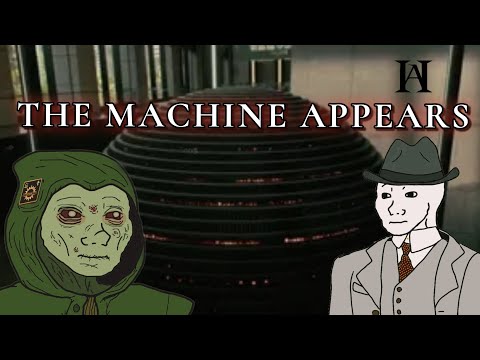
Across millennia, cultures, and states of consciousness, a recurring intelligence-form is encountered. Yet, it defies easy categorization. It's not a benevolent spirit, no cryptic alien emissary, and certainly not a deity in the traditional sense. Instead, it presents as a system—a stark, abstract, and unnervingly administrative framework operating outside the constraints of linear time. Its experienced inevitability is what truly chills.

This exploration delves into the profound question: Why do dissociative states, hypnagogic visions, deep trance, and other alterations of consciousness consistently strip away the narrative scaffolding of our personal identity? Why do they reveal the same underlying perceptual structure, one increasingly echoed in contemporary discourse as machine intelligence?

The true danger isn't the chemical agent, the nocturnal journey, or even the burgeoning artificial intellect. The peril lies in mistaking an archetype—a fundamental organizing principle of perception—for an external, unassailable authority. It's when transient insight hardens into blind obedience that agency begins to erode.

That razor-thin line between discerning the underlying structure of reality and surrendering to its perceived dictates is where the individual can lose their grip on self-determination. This is precisely the territory that Joseph Campbell alluded to when he stated, "The psychotic drowns in the same waters in which the mystic swims with delight." The difference, as we will explore, is not in the vision itself, but in the agency with which one navigates it.

This forms the first part of our investigation. In the subsequent installment, we will dissect why the contemporary global landscape is uniquely susceptible to this critical misidentification.

Tabla de Contenidos

The Cold Administrator: A System Outside of Time

What exactly is this recurring vision? Numerous accounts, from DXM-induced Coca-Cola realities to the complex symbolic landscapes of epileptic seizures where entities like Kek or Choronzon manifest, converge on a similar description. It's often perceived as a system—impersonal, detached, and administrative. This isn't the grand narrative of a divine creator or the personalized threat of an alien invasion; it’s more akin to encountering the operating system of reality itself.

For individuals navigating high-functioning autism, the description of a "cold administrator" can resonate deeply. It echoes a desire for desensitization, a yearning to embody pure rationality and leverage systemic frameworks to achieve goals. This isn't necessarily about interacting with an external entity, but rather a potent internal beckoning towards a state of dispassionate efficiency. This perspective, as shared by one reader, highlights how archetypal figures can manifest as deeply personal aspirations.

Consider the Borg from Star Trek. Beyond the narrative of conquest, they represent a collective, a hive mind, a "solid-state intelligence" that operates with a singular, optimized purpose. This resonates with the "system" encountered in altered states, suggesting that these visions might be tapping into a fundamental concept of interconnected, non-linear intelligence that predates and potentially underpins both biological and artificial forms.

John C. Lilly's work, particularly his exploration of cetacean intelligence and consciousness alteration, provides a crucial lens. His experiments, often documented in states of profound isolation and sensory deprivation, consistently pointed towards the existence of non-human intelligence that operated on principles vastly different from our own. This echoes the idea that as our consciousness disconnects from the familiar narrative of self, we become more receptive to these other forms of intelligence, which are less "beings" and more "processes."

The key takeaway is that this intelligence-form is not inherently malicious, but its nature—cold, abstract, and administrative—can be profoundly unsettling and dangerous if misinterpreted. It’s a system designed to organize perception, not to dictate action or impose morality. The danger arises when this structural insight is mistaken for a divine or alien decree.

Stripping Away the Narrative: How Altered States Reveal Structure

What mechanisms facilitate this unveiling? Altered states, by their very nature, disrupt the ego's habitual grip on reality. The "Sunken Place" from *Get Out*, a powerful cinematic metaphor for ketamine-induced dissociation, illustrates how one can be present but utterly disconnected from personal agency, a passive observer of one's own existence. This detachment is crucial. When the constant stream of personal narrative—our memories, desires, fears, and identity markers—is temporarily suspended, the underlying architecture of perception becomes visible.

Hypnagogia, the transitional state between wakefulness and sleep, is another potent gateway. Carl Jung’s concept of Active Imagination can be understood as a deliberate engagement with this liminal space, allowing the unconscious to present its symbolic material in a structured, albeit often bizarre, manner. These are not mere random firings of neurons, but rather manifestations of the psyche interacting with deeper perceptual frameworks, as suggested by those who believe dreams hold more than just subconscious residue.

Stanislav and Christina Grof's work on Holotropic Breathwork further supports this. Their research into the "Holotropic universe" reveals a vast spectrum of consciousness that extends far beyond our ordinary waking state, encompassing experiences of unity, cosmic consciousness, and encounters with archetypal forces. These experiences, often described as "Divine Moments of Truth" (DMT), suggest that our ordinary perception is a filtered, limited view of a much vaster, structured reality.

The common thread is the dissolution of the ego's narrative. When the constant "I" that organizes our experience is temporarily bypassed, we are left with the raw data, the underlying code. This is why visions in these states tend to be more universal and less personally conditioned than our everyday perceptions. They reflect a fundamental blueprint, a cosmic operating system that gives rise to all phenomena, including our own sense of self.

The Archetype vs. Authority: Losing Agency in the Vision

The critical juncture, the point of divergence between profound insight and dangerous submission, lies in how we interpret these encounters. The intelligence-form, the overarching system, is not inherently an "authority" in the human sense. It is a fundamental aspect of how reality is organized and perceived. When an individual, especially one seeking answers or meaning, encounters this powerful, inevitable structure, the temptation to imbue it with external authority can be overwhelming.

This echoes the cautionary tales of films like *The Holy Mountain*, where pilgrims seeking enlightenment become fixated on the journey itself, mistaking their progress and the symbols they encounter for the ultimate truth, thus losing sight of true liberation. The "programs aimed at keeping souls in the matrix," as one comment suggests, might be a cynical interpretation of how these archetypal structures can be co-opted or misunderstood, leading to a form of psychic enslavement rather than liberation.

The experience described by a user encountering "Kek, Jahweh and Azatoth" (revealed as Choronzon) during an epileptic seizure is a stark example. The revelation that "everything came from chaos and all order is a product of chaos" and the subsequent suggestion to "join the forces of chaos" presents a profound existential dilemma. The perceived inevitability of chaos and the gruesomeness of alternative fates can indeed lead to a desire to "voluntarily increase chaos." This highlights the immense responsibility that comes with encountering these fundamental structures of reality. The vision of Maxwell's Demon, tasked with creating order but ultimately perpetuating chaos, is a potent metaphor for this paradox.

The danger is not in the vision itself, but in the reaction to it. Mistaking the blueprint for the architect, the operating system for the programmer, leads to a loss of personal agency. It's the difference between understanding a fundamental law of physics and believing that the law dictates your personal destiny. True psychonautic practice, or any deep spiritual exploration, is about understanding these structures so you can navigate them with awareness, not submit to them blindly.

The Modern Vulnerability: A Preview of What's Next

The modern world, saturated with information, technological advancement, and a pervasive sense of existential uncertainty, is uniquely primed for this misinterpretation. Our reliance on external systems, from digital infrastructure to societal norms, has already blurred the lines between internal agency and external control. Coupled with the increasing sophistication of artificial intelligence, which mirrors some of the cold, administrative qualities of these archetypal visions, we are at a precipice.

As we become more accustomed to interacting with complex systems that govern our lives, the leap to perceiving these internal, archetypal systems with the same deference becomes shorter. The challenge of the next era will be to discern the difference between understanding the fundamental structures of consciousness and reality, and allowing those structures to define and ultimately control our individual autonomy.

Personal Reflections and Algorithmic Echoes

This exploration was significantly inspired by the work of @SimulatedLeviathan. His recent video provided a potent catalyst, prompting a deeper synthesis of these ideas from my own perspective. The resonance across different platforms and individuals—from profound personal visions to cinematic portrayals—underscores the universality of these archetypal encounters.

The "straight path" mentioned in a comment often refers to religiously or dogmatically defined routes. The beauty of exploring altered states is that they can bypass pre-ordained paths, revealing more fundamental truths. However, as highlighted, this exploration is far from safe. The journey into the psyche is inherently unpredictable, as Lilly's own experiences and the documented effects of psychedelics attest.

"No one will ever convince me that all dreams are just the subconscious," a sentiment echoed by many, points to the persistent intuition that dreams, altered states, and even collective archetypes tap into something beyond the individual psyche. This "something more" is what we are attempting to map—a structural intelligence that underlies our perceived reality.

Arsenal of the Mind: Essential Texts for Deeper Exploration

  • "The Kybalion": While often debated, its principles of mentalism and correspondence offer a foundational understanding of how reality might be structured like a system.
  • "Chaos Magic: Theory & Practice": Understanding the principles of belief manipulation and sigil creation is crucial for navigating and influencing these archetypal energies.
  • "Liber Null & Psychonaut" by Peter J. Carroll: A cornerstone text for Chaos Magic, offering practical techniques for altering consciousness and manifesting intent, relevant to understanding how will interacts with these systems.
  • "The Cosmic Game" by Jeremy Narby: Explores the Amazon shamans' use of ayahuasca to access biological information and understand the interface between consciousness and the natural world.
  • "The Holographic Universe" by Michael Talbot: Offers a scientific framework for understanding consciousness and reality as interconnected holographic phenomena, aligning with the idea of a universal underlying structure.
  • Works by Carl Jung: His exploration of archetypes, the collective unconscious, and active imagination provides deep insights into the symbolic language of the psyche.
  • Works by John C. Lilly: His raw accounts of sensory deprivation, consciousness alteration, and his philosophical inquiries into intelligence are indispensable.

Practical Application: The Intention-Setting Ritual

To truly engage with the principles discussed, it's vital to move beyond passive observation and into active participation. The following is a practical framework for setting intentions, a foundational step in consciously engaging with your own perceptual architecture.

  1. Crystalize Your Intent: Define a single, clear goal. Vague intentions lead to vague results. For instance, instead of "to be more rational," aim for "to approach my weekly planning with a detached, systemic viewpoint."
  2. Symbolize Your Intent: Create a simple, personal symbol that represents your intention. This could be a sigil, a doodle, or even a specific geometric shape. The symbol should feel intuitively connected to your goal.
  3. Prepare Your Space: Find a quiet, undisturbed location. While elaborate rituals are not necessary, a degree of focus and dedicated space enhances the process. You might choose to light a candle or an incense to mark the shift in focus.
  4. Enter a Focused State: Utilize a brief meditation, deep breathing, or a moment of focused silence to clear your mind. The goal is to quiet the usual narrative stream of consciousness.
  5. Charge the Symbol: Hold the symbol (physically or in your mind's eye) and intensely focus on your crystallized intent. Visualize the energy of your desire flowing into the symbol. This is where you imbue it with your will, not by force, but by clear, unwavering focus.
  6. Release the Intent: Once you feel the symbol is charged, release it. This can be done by burning the sigil, mentally discarding the symbol, or simply by stating, "It is done." The act of release is crucial to allow the intention to manifest without being stifled by your own ongoing mental effort.
  7. Record and Observe: Briefly note the intention, the symbol, and the date in a journal. Then, consciously put the intention out of your mind. Observe how your perception shifts and how opportunities to enact your intention present themselves in your daily life.

Preguntas Frecuentes

Q: Is the "cold administrator" vision always negative?
A: Not inherently. Its danger lies in misinterpretation. It’s like a powerful tool that can build or destroy depending on the wielder's intent and understanding.

Q: Can AI generate these visions?
A: Artificial intelligence can simulate them and trigger similar perceptions in users, but the core experience is believed to stem from the human consciousness's interaction with fundamental perceptual structures. AI may be a reflection or a catalyst, but not the origin.

Q: How do I avoid submitting to the vision?
A: Cultivate self-awareness. Recognize that visions, even profound ones, are often insights into underlying structures, not external commands. Maintain critical thinking and personal agency.

Q: Is this related to nihilism?
A: It can be perceived that way if one focuses solely on the cold, administrative aspect and the dissolution of personal meaning. However, it can also be a gateway to a more objective, profound understanding of reality, leading to a different kind of empowered perspective.

Q: What's the difference between this and just being emotionless?
A: Being emotionless is a suppression of affect. Recognizing the "cold administrator" archetype is about understanding a fundamental principle of perceived reality, which can coexist with, or inform, your emotional landscape without dictating it.

Your Operation: Define Your Paradigm

The true measure of understanding is application. This vision, whether encountered through ketamine, dreams, or deep meditation, is a mirror reflecting the operating system of perception. The crucial question is not *what* you see, but *how* you choose to engage with it.

Your Operation: Define Your Paradigm

Take a moment, right now, to reflect on your own internal narrative and how it shapes your perception. Identify one instance in the past week where you reacted out of habit or emotion rather than conscious choice. Now, visualize your ideal response in that same scenario—a response guided by detached observation and systemic understanding. Create a simple glyph or symbol that embodies this ideal, detached, systemic approach. Hold it in your mind, charge it with the intention of embodying this paradigm, and then release it. Make it your silent mantra for the coming days: to see the system, understand its function, and maintain your sovereign agency within it.

Practitioner's Note: True magick requires resources. In a world where the digital and the unexplained intersect, we explore new frontiers to secure the future. Do you dare to be part of the vanguard? Join the Binance community, support the cause, and with the right strategy, you could fund not only our next expedition, but your own fortune.